

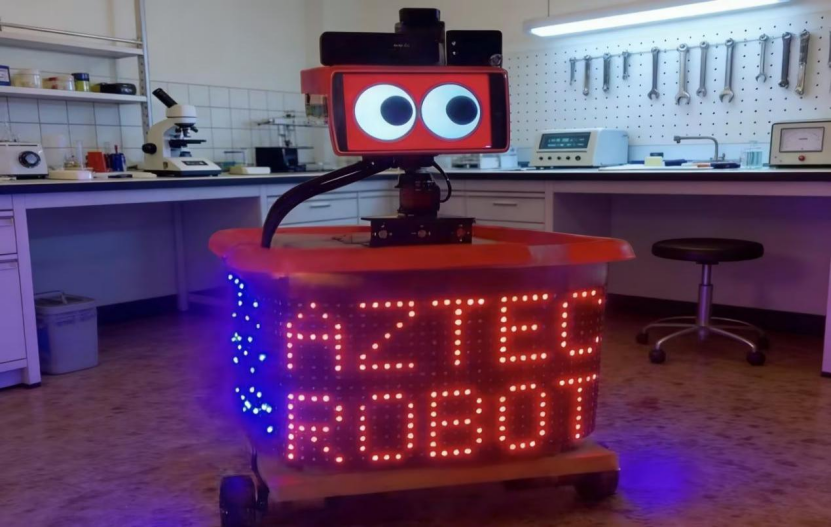
For children with autism spectrum disorder, perceiving the subtle movements of the world and maintaining appropriate social distance is a challenging task. Traditional rehabilitation training often faces issues such as high labor costs, limited scenarios, and strong defensiveness from the patients. How to utilize cutting-edge sensing technologies to create a low-stress, high-precision, and quantifiable interactive environment is the key breakthrough for the intelligent upgrade of special education. The Microchip Sensor Division (including SiliconPrint Technology) independently developed the CS20 solid-state lidar and successfully enabled the Aztec robot. This is not only our first implementation in the special education field, but also marks the extension of 3D visual perception from industrial production lines to more humanistic social scenarios.
一. Application Scenario Dissection: Building a Sense of Security to the Tiniest Degree
The interaction feedback of children with autism is often subtle and non-standard. For instance, the robot needs to identify whether the child has a tendency to approach (even if it's just leaning forward by 10 centimeters), or determine if the child is pacing due to anxiety.
Traditional cameras are greatly affected by light and lack depth information, making it impossible to precisely construct a three-dimensional spatial trajectory. The introduction of the CS20 solid-state lidar has equipped the Aztec robot with a pair of thinking eyes:
1. Non-contact Precise Following
Relying on the depth perception capability of the CS20, the robot can accurately capture the position changes of the child within a range of 0.1 meters to 5 meters. When the child attempts to approach for interaction, the robot can actively adapt to the height and angle; when the child retreats due to stimulation, the robot maintains a safe distance to avoid causing a sense of pressure.
2. Quantitative Analysis of Behavioral Trajectory
Through the point cloud data output by the SDK, the background system can record the activity heat map of the child in the space. This provides objective data for the rehabilitation therapist, facilitating the assessment of the effectiveness of the intervention plan and converting subjective observation into a digital rehabilitation file.
二. Technical Core: CS20 Solid State Lidar
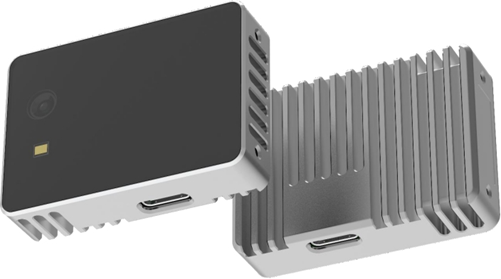
Its ability to operate stably in complex interactive environments stems from the balance between performance and engineering of the CS20 solid state lidar. The Sensor Production Microchip Division provides chip-level one-stop support for this application scenario.
1. In terms of fine motion capture
The CS20 is equipped with a 640×480 ToF image sensor, with a measurement error of ±1% within the range of 0.5 meters to 5 meters. This means that the robot not only can sense whether someone is present, but can also precisely distinguish whether a child is nodding to indicate or waving their hands to avoid. This precisely represents the non-verbal social signals of children with autism that need to be understood.
2. In terms of device integration friendliness
The CS20, with a small size of 48mm×34mm×12mm and a Type-C plug-and-play interface, provides design freedom for robot manufacturers. The compact body occupies almost no additional structural space and does not require complex installation positions for sensors or re-molding, fully retaining the industrial design language of the Aztec robot, effectively reducing the hardware modification cost for secondary development.
3. In terms of safety and stability
The CS20 strictly controls the human eye safety level to the CLASS 1 standard. Even if children look directly at it for a long time, it will not cause any damage to their vision. This eliminates the concerns of parents and rehabilitation institutions from the source. At the same time, the wide working temperature range of -10℃ to 50℃ ensures that the device always outputs data stably in complex rehabilitation room environments such as alternating seasons and air conditioning direct blowing.
4. In terms of development efficiency
The CS20 is compatible with ROS, Ubuntu, and Windows 10 operating systems and can output depth maps and point cloud data. This data acquisition method significantly shortens the adaptation cycle for robot manufacturers from prototype debugging to mass production, allowing algorithm engineers to focus on optimizing the upper-level interaction logic rather than repeatedly adapting the underlying drivers.

三. From Single Point Breakthrough to Multi-Functional Empowerment: The Full Stack Advantage of the IDM Model
This application in the field of special education is the inevitable result of the all-round layout of the production micro-sensor division.
1. Source Assurance
Relying on its own wafer factory and automotive-grade AEC-Q100 production line control, it ensures the consistency and reliability of the sensors in complex electromagnetic environments, which is crucial for companion robots that need to operate stably for a long time.
2. Agile Response
The R&D network spanning China, Germany, Italy, and the Netherlands can quickly adjust the module firmware and optical design plans in response to the non-standard demands of the special education niche market. In terms of service response, what we deliver is the Chinese speed - efficient, flexible, and zero delay.
3. Cost Optimization
The scale effect brought by the IDM model has significantly reduced the cost of high-precision 3D perception, making it possible for consumer-level rehabilitation/陪伴 robots to be equipped with industrial-grade radars.
四. Outlook: Beyond Robots, Making Perception Have Warmth
The multiple capabilities of the CS20 solid-state lidar, such as robot obstacle avoidance, industrial vision, live body detection, body sensation interaction, and 3D modeling, are gradually penetrating into more fields with humanistic warmth. The true intelligent transformation begins with precise and gentle perception of the real world. We look forward to collaborating with more global industry partners to transform complex sensing technologies into simple, easy-to-use, and inclusive solutions, allowing the light of technology not only to illuminate efficiency but also to warm the hearts.
sparcsensor@ic-sparc.com
+86 13701993643
+49 (0) 871 660 665-0