

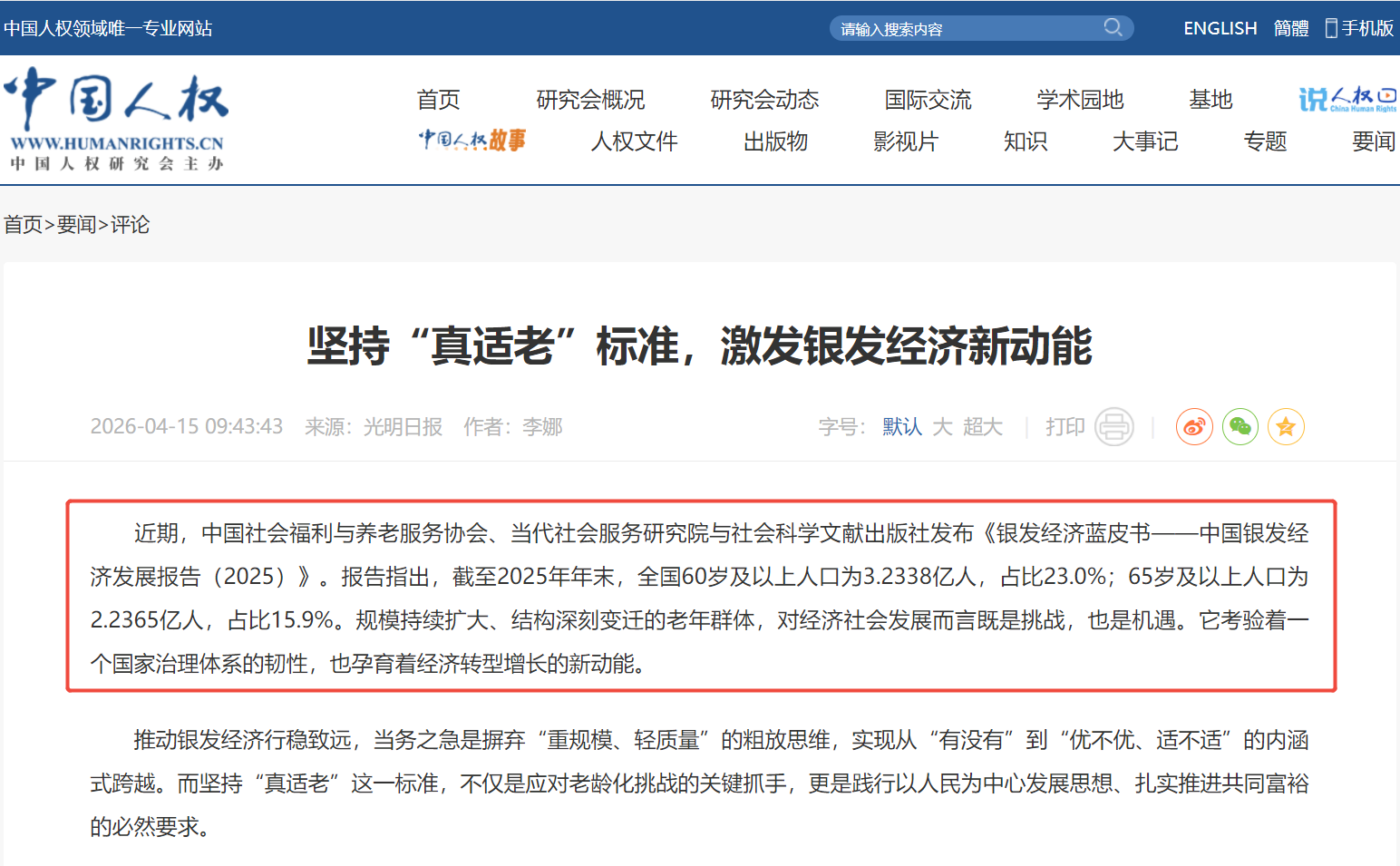
The "Silver Economy Blue Book - China Silver Economy Development Report (2025)" shows that by the end of 2025, the population aged 60 and above across the country exceeded 320 million. Combined with the injury monitoring data of the Chinese Center for Disease Control and Prevention over the years, the number of accidental falls among the elderly is also not to be underestimated. The severe shortage of caregivers, the resistance to wearing wearable devices, and the privacy红线 of ordinary cameras: these deep-seated contradictions not only consume the energy of the operators but also threaten the life safety and dignity of the elderly. How to achieve 24/7 protection without disturbing, invading, or misjudging? Based on the CS20 solid-state lidar, the non-contact fall detection solution proposed gives an answer to solidify the safety logic of elderly care from the technical bottom layer.
一. Breaking the Stalemate: Facing the Imbalance between Efficiency and Dignity
The current predicament of elderly care is fundamentally an imbalance between efficiency and dignity.
1. Human Resources Crisis
The common ratio of caregivers in elderly care institutions is 1:8. This results in an average discovery time of over 15 minutes after a fall, thus missing the golden rescue window.
2. Wearable Device Crisis
The detachment rate of smart wristbands is relatively high. Nighttime activities such as getting out of bed, bathing, and using the toilet are precisely the areas where the wearing willingness is low.
3. The Battle between Privacy and Accuracy
Although ordinary RGB cameras can clearly capture the scene, they are difficult to enter the bedroom and bathroom due to the risk of privacy leakage; while some non-visual sensors protect privacy, they often fail to distinguish between a slow fall and bending over to pick up something, resulting in frequent false alarms that erode user trust and the value of the system.
二. Foundation: Building a Privacy Barrier with iToF
The core of the proposed solution lies in using iToF (indirect flight time) technology to construct an invisible three-dimensional privacy barrier. Unlike traditional cameras that capture color images, the working principle of the CS20 solid-state lidar is: by analyzing the proportional relationship of energy values collected at different time windows, the signal phase is determined, and the time difference between the transmitted and received signals is indirectly measured. No image frames are generated throughout the process, only spatial depth data and signal amplitudes are output. This technical approach brings about two fundamental changes:
1. Source Privacy Protection
The sensor itself does not have the ability to perform visual imaging. This significantly reduces the possibility of privacy information leakage at the physical level, enabling the deployment of the device in private spaces such as bedrooms and bathrooms, thereby alleviating the ethical concerns and compliance challenges faced by traditional visual surveillance.
2. Three-dimensional space understanding
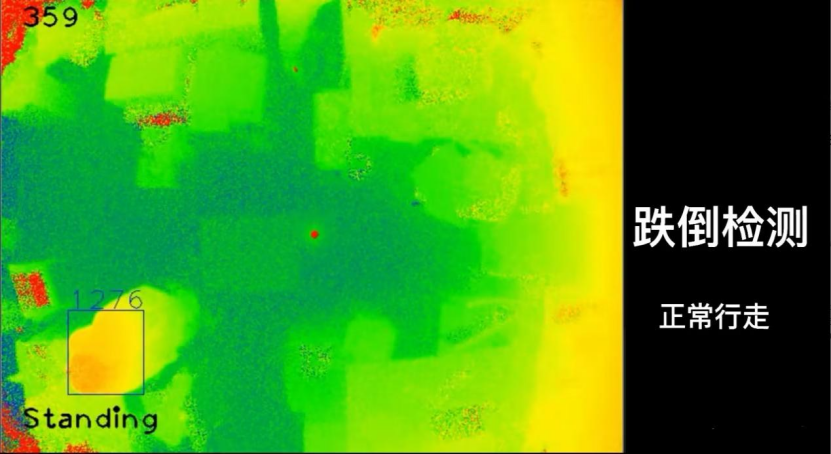
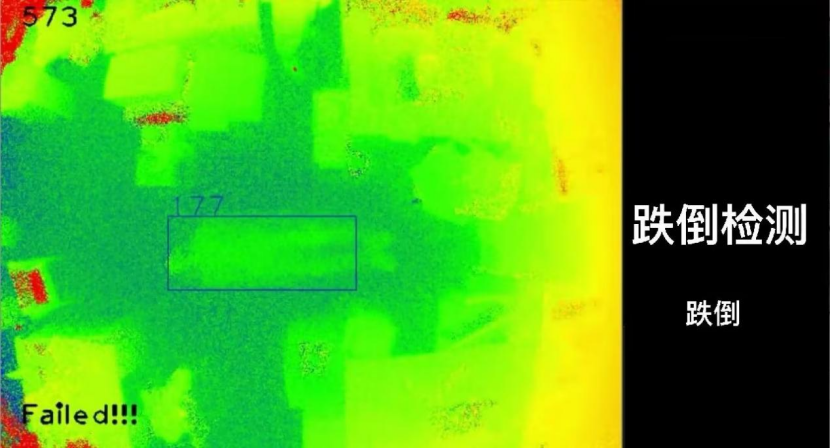
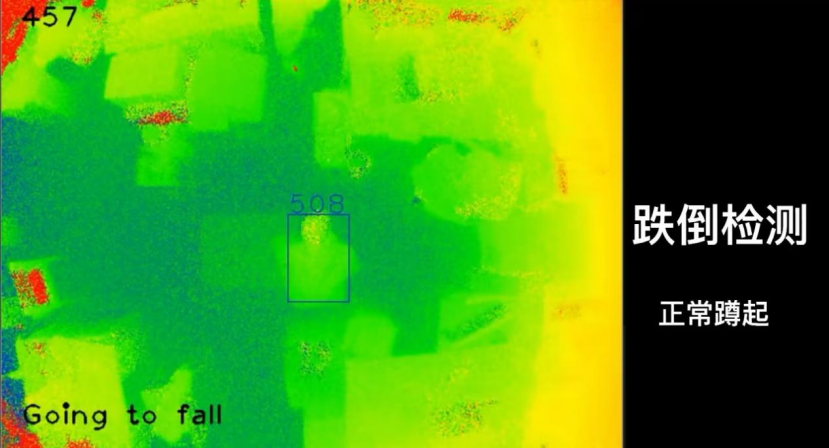
Compared to sensors that can only detect planar movements, the CS20 is capable of constructing a spatial point cloud matrix. Based on this algorithm, it can accurately calculate the changes in the height of the human center of gravity and the trajectory of the posture, thereby accurately distinguishing between "lying flat after falling" and "deep squatting" or "bending over".
三. Protection: From Passive Response to Active Warning
In practical application scenarios, the solution equipped with CS20 demonstrates three distinct competitive advantages:
1. Non-intrusive protection, eliminating the burden of wearing devices
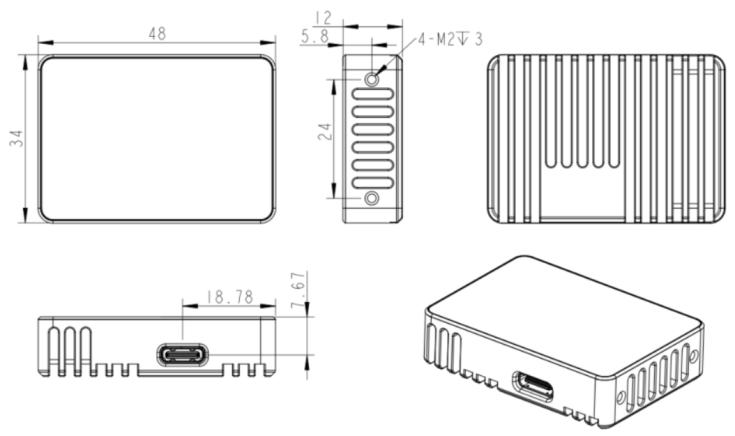
The solution does not require the elderly to wear any electronic devices and does not alter their existing living habits. Leveraging the compact size of CS20 (48mm × 34mm × 12mm) and its wide operating temperature range of -10 to 50℃, the device can be discreetly installed on the ceiling or in corners, providing 24-hour continuous coverage of high-risk areas such as at night and in bathrooms, achieving "presence without intrusion".
2. Precise judgment within fractions of a millimeter
Relying on the deep perception accuracy of CS20 and combined with the self-developed multi-data fusion algorithm, the system has strong resolution for human postures in the space, and can effectively distinguish the essential differences between bed rest, slow walking, and sudden falls. It significantly reduces false alarms caused by changes in light, mosquito interference, or pets passing by, and strives to ensure that the vast majority of alerts have high reference value.
3. High integration and scene compatibility
CS20 uses the USB 2.0 Type-C standard interface for power supply and transmission, significantly simplifying the wiring difficulty in engineering installation. Whether it is the renovation of existing old houses or the planning of new health care communities, the solution can be quickly deployed and debugged, and smoothly connect with existing call platforms or community management backends.
四. Extension: Full-chain health care perception base
Based on solving safety pain points, the value of the solution is not limited to single point alarms, but lies in its scalability as a spatial perception base.
1. Home care elderly care scenario
Children or community managers can receive abnormal posture alarms in real time through the platform, forming an efficient closed loop of discovery - verification - rescue.
2. Institutionalized Elderly Care
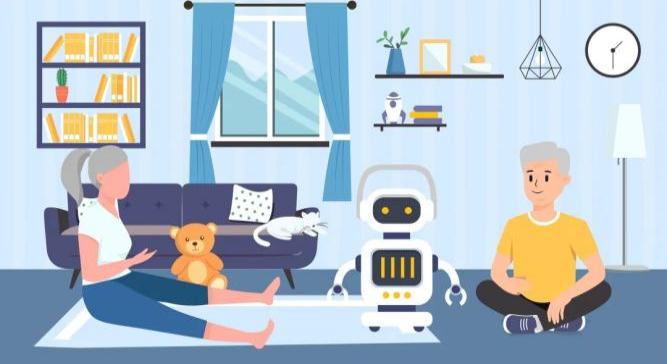
This system conducts spatial monitoring in areas with multiple beds, assisting caregivers in making priority judgments, freeing up their limited energy from ineffective inspections and redirecting it towards more compassionate companionship services.
We will continue to iterate our algorithms and explore the robustness of recognition in scenarios involving multiple people and obstructive environments. In the future, based on the depth data accumulated from TOF technology and combined with big data analysis, we will achieve long-term non-intrusive monitoring of gait and activity trajectories, promoting the transition from post-event handling to pre-event prevention in safety monitoring.
五. Zhi Yuan: Transferring the Warmth of Protection through Precise Sensing
The warmth of technology lies in the meticulous care for the dignity of life. The Sensor Microchip Division of Shengzhu will continue to deeply explore TOF sensing technology, collaborate with global elderly care industry partners, and safeguard the stable lives of the elderly population with more precise algorithms, a more stable supply chain, and a more open ecosystem.
sparcsensor@ic-sparc.com
+86 13701993643
+49 (0) 871 660 665-0